

Skew Rolling Mill Rolls Manufacturer and Custom Die Solutions
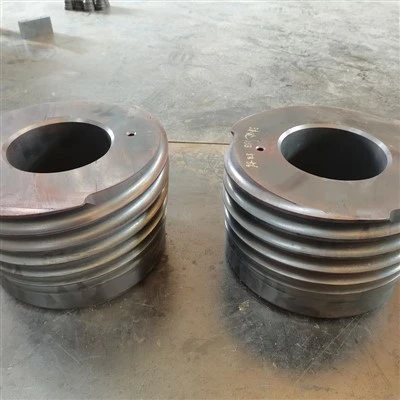
Skew Rolling Mill Rolls serve as the primary forming dies in twin-roll continuous skew rolling mills, converting heated round steel bars into spherical grinding media. Fabricated from alloy tool steel and machined via multi-axis CNC milling, these roll dies maintain precise helical groove profiles under high-temperature continuous forging loads.
Product Categories and Application Range
|
Series |
Target Ball Diameter Range |
Recommended Mill Model |
Primary Die Application |
|
SKR-50 Series |
Dia 20 mm - Dia 50 mm |
SKM-50 / Equivalent Mills |
Fine grinding media & cement plant balls |
|
SKR-80 Series |
Dia 40 mm - Dia 80 mm |
SKM-80 / Equivalent Mills |
Copper, gold, and iron ore mineral processing |
|
SKR-120 Series |
Dia 70 mm - Dia 120 mm |
SKM-120 / Equivalent Mills |
Primary SAG mill and heavy-duty grinding balls |
Technical Specifications
|
Parameter |
Specification Standard |
|
Base Material Options |
5CrMnMo, 60CrMnMo, H13 (4Cr5MoSiV1) |
|
Forging Ratio |
Greater than or equal to 4:1 (Dense metallurgical structure) |
|
Working Surface Hardness |
HRC 48 - HRC 55 (Uniform depth across groove profile) |
|
Core Hardness |
HRC 38 - HRC 45 (Ensures impact toughness) |
|
Groove Tolerance |
+/- 0.05 mm profile pitch accuracy |
|
Heat Treatment Method |
Vacuum quenching and multi-stage tempering |
|
Average Wear Life |
1500 to 3500 tons of rolled steel balls per set (Depends on ball size and steel grade) |
Compatible Raw Materials and Bar Stock
Alloy Steels: 60Mn, 65Mn, 75Cr1, 60CrMnMo
Grinding Media Steels: B2, B3, B4, B6 series bars
Carbon Steels: #45, #50, #65 steel grades
Equipment Compatibility
Interchanges with standard domestic and imported horizontal and vertical twin-roll skew rolling mills.
Mounting bores, keyways, and axial positioning steps machined to exact customer blueprints or equipment nameplate specifications.

Custom Manufacturing and OEM Engineering
Custom roll die engineering based on specific rolling mill setups and target grinding ball specifications.
Custom Helix Calculation
Groove lead angles and pitch expansion curves calculated via CAD/CAM software to match bar shrinkage and material flow rates.
Blank Forging Customization
Heavy-duty alloy steel round billets forged on hydraulic presses to eliminate internal porosity prior to machining.
Special Coating Options
Optional wear-resistant surface treatments or nitriding layers available for specialized high-chromium bar processing.
Manufacturing and Quality Control
Roll dies undergo rigorous metallurgical verification before factory dispatch to ensure structural integrity under cyclic thermal impact.
Ultrasonic Flaw Detection (UT)
Forged roll blanks inspected 100 percent in accordance with EN 10228-3 class 3 standards to detect internal inclusions or micro-voids.
Multi-Axis CNC Machining
Helical grooves cut on specialized 4-axis CNC milling centers to maintain exact tooth profile symmetry and surface finish.
Controlled Vacuum Heat Treatment
Computer-controlled vacuum furnaces execute uniform austenitizing and tempering cycles, preventing surface decarburization and distortion.
Hardness and Metallographic Inspection
Rockwell hardness testing performed at multiple points along the active groove face, supplemented by grain size microstructure analysis.
Spare Parts and Auxiliary Support
Matching Guide Plates
Water-cooled alloy guide plates designed to match roll pitch entry zones and prevent bar jamming.
Locking Wedges and Clamps
Heat-treated clamping blocks and adjustment shims for secure roll alignment.
Technical Setup Guidance
Engineering documentation covering axial positioning offsets, roll gap adjustments, and initial thermal run-in procedures.
Packaging and Delivery
Corrosion Protection
Machined roll faces and active grooves coated with heavy-duty rust-inhibiting grease and sealed in multi-layer moisture-barrier plastic wrap.
Crate Packaging
Secured inside heavy-duty, IP54-compliant fumigated wooden crates with internal timber bracing to prevent shifting during ocean freight.
Lead Time
25 to 40 days standard production cycle depending on groove complexity and material availability.
Procurement Process
Drawing and Specification Submission: Customer provides existing roll drawings, equipment models, target ball sizes, and steel bar grades.
Engineering Review and Proposal: Technical team confirms helix profile calculations, material selection, and estimated tonnage yield.
Contract and Technical Sign-Off: Finalization of delivery terms, material test certificates, and machining tolerances.
Machining and Heat Treatment Milestones: In-process quality control checkpoints including forging inspection, rough machining, heat treatment, and finish milling.
Final Inspection and Factory Release: Dimensional CMM verification, hardness test reports, and MTC ISO 10204 3.1 certification issued.
Dispatch and Logistics: Secure crating, container loading, and shipment tracking to destination port.
Our Factory


fAQ
Q: What is the expected service life of your skew rolling mill rolls?
A: Roll life varies based on ball diameter, bar material grade (such as high-carbon alloy vs. carbon steel), and operating temperature stability. Standard 5CrMnMo or 60CrMnMo rolls typically process between 1500 and 3500 tons of steel balls before groove re-machining is required.
Q: Can you manufacture roll dies from custom drawings or worn sample measurements?
A: Yes. We accept customer engineering drawings, 3D models, or physical sample measurements. Our engineering team verifies the helix angle and pitch expansion before generating CNC toolpaths for production.
Q: How do you prevent thermal cracking during continuous rolling operations?
A: Thermal cracking is mitigated through proper material selection (such as H13 or modified 60CrMnMo), vacuum heat treatment achieving balanced core toughness and surface hardness, and strict pre-heating protocols before feeding hot bars into the mill.
Q: What material test reports and quality documents are supplied with the rolls?
A: Every shipment includes a Material Test Certificate (MTC ISO 10204 3.1) covering chemical composition, mechanical properties, ultrasonic testing results, and Rockwell hardness inspection data.
Q: Are these rolls compatible with imported skew rolling mill equipment?
A: Yes. Rolls are custom-machined to match the exact mounting dimensions, spindle taper, keyway configuration, and axial locking mechanism of specific domestic and imported mill brands.
Q: What is the recommended storage procedure for spare roll dies?
A: Rolls should be stored in a dry, indoor environment in their original export packaging. The rust-preventive grease coating should remain intact. If stored for more than six months, inspect the protective coating and re-apply rust inhibitor if necessary.
As one of the most professional skew rolling mill rolls manufacturers and suppliers in China, we're featured by quality products and good price. Please rest assured to wholesale durable skew rolling mill rolls from our factory. We also accept customized orders.
Roller of Steel Ball Skew Rolling Mill, skew roll, Skew Rolling Mill Rolls