
Industrial Grinding Media Manufacturer and Mining Consumable Solutions
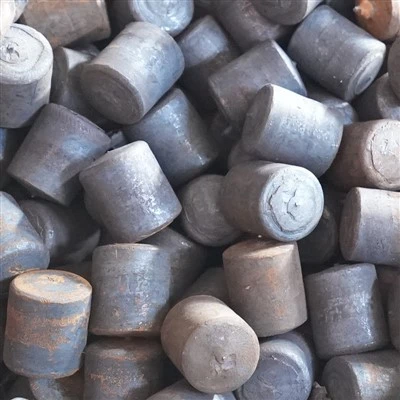
Industrial grinding media includes forged steel balls, cast high-chromium balls, grinding cylpebs, and alloy steel rods engineered for mineral processing circuits, cement grinding, and thermal power applications. Manufactured from clean alloy steels and chromium iron, these media provide high volumetric hardness, low breakage rates under heavy drop impacts, and consistent wear profiles across high-tonnage milling operations.

Product Categories and Media Selection
|
Category |
Primary Material Options |
Diameter Range |
Manufacturing Process |
Primary Milling Application |
|
Forged Steel Balls |
60Mn, 65Mn, B2, B3, B6 Alloy |
Dia 20 mm - Dia 150 mm |
Automatic Skew Rolling / Drop Forging |
Primary ball mills, SAG mills, and wet copper/gold ore grinding |
|
Cast High-Chrome Balls |
Cr 10 percent - 26 percent Alloy White Iron |
Dia 15 mm - Dia 120 mm |
Automatic Electric Furnace Casting |
Cement dry grinding, coal power generation, and acidic mineral slurries |
|
Cast Low/Mid-Chrome Balls |
Cr 1 percent - 5 percent Cast Iron |
Dia 20 mm - Dia 100 mm |
Automated Molding Line Casting |
Fine regrind circuits, cement raw meal, and dry industrial minerals |
|
Grinding Cylpebs |
High/Low Chrome, Alloy Steel |
Dia 12x12 mm - Dia 35x35 mm |
Casting / Forging |
Secondary fine grinding mills requiring higher surface-area-to-mass ratio |
|
Alloy Grinding Rods |
60Mn, 65Mn, 42CrMo Steel |
Dia 60 mm - Dia 100 mm |
Hot-Rolled and Heat-Treated Round Bars |
Rod mills for coarse gravity separation and sand production circuits |
Technical Specifications
|
Parameter |
Forged Alloy Steel Balls (B2/B3/B6) |
Cast High-Chromium Balls (Cr 10-26 percent) |
|
Surface Hardness |
HRC 58 - HRC 65 |
HRC 58 - HRC 64 |
|
Core Hardness |
HRC 56 - HRC 62 |
HRC 56 - HRC 62 |
|
Volumetric Hardness |
Greater than or equal to HRC 58 |
Greater than or equal to HRC 58 |
|
Impact Toughness (AK) |
12 J/cm2 - 20 J/cm2 (Measured on Dia 100mm) |
3 J/cm2 - 6 J/cm2 |
|
Breakage Rate |
Less than 0.5 percent (In SAG and primary ball mills) |
Less than 0.5 percent |
|
Density |
Approx. 7.85 g/cm3 |
Approx. 7.60 - 7.75 g/cm3 |
|
Microstructure |
Fine Tempered Martensite + Micro-Carbides |
Martensite + M7C3 Eutectic Carbides |
Compatible Mill Equipment
SAG / AG Mills: Heavy-duty Dia 120mm to Dia 150mm forged balls designed to withstand impact energy without catastrophic spalling or cracking.
Secondary and Regrind Ball Mills: Dia 30mm to Dia 80mm forged or high-chrome balls for ball charge maintenance.
Cement and Coal Tube Mills: High-chromium cast balls and cylpebs resisting dry abrasion and heat degradation up to 120 deg C inside compartments.
Mineral Processing Conditions
Wet Slurry Grinding: High-impact forged balls for neutral to alkaline mineral slurries (pH 7 - pH 11).
Corrosive / Acidic Mining Environments: High-chromium cast media for copper-gold heap leach ores or acidic pulps (pH 3 - pH 6).

Custom Manufacturing and OEM Engineering
Grinding media formulations tailored to specific ore hardness (Work Index), mill liner configurations, and target product fineness (P80 values)
Alloy Composition Adjustments
Custom carbon, manganese, chromium, and molybdenum ratios tuned to specific ore abrasiveness.
Heat Treatment Optimization
Controlled oil quenching, water-spray quenching, and multi-stage tempering cycles eliminate residual stress and prevent core spalling.
Custom Sizing and Gradings
Pre-mixed ball charges supplied according to plant mill charge calculations for initial start-ups.
Manufacturing and Quality Control
Production facilities utilize continuous automated rolling lines and electric induction melting furnaces with full chemical traceability.
Spectrometric Heat Analysis
Optical emission spectrometers (OES) verify ladle chemical composition prior to pouring or billet rolling.
Volumetric Hardness Profiling
Sectioned balls tested from surface to core at 5 mm increments to ensure a uniform hardness gradient.
Drop Ball Impact Testing
Production samples subjected to a 3.5-meter drop test machine for 10000 continuous impacts to verify toughness and zero breakage.
Defect and Porosity Control
Ultrasonic inspection of raw steel billets and automatic magnetic particle testing on cast media detect internal blowholes or shrinks.
Spare Parts and After-Sales Support
Charge Maintenance Calculators
Technical assistance for calculating ball top-up rates (grams per ton of milled ore) based on mill power draw and operating hours.
Worn Media Analysis
Field sampling and cross-sectional wear analysis of worn balls retrieved from mill shutdowns evaluate spalling, ovality, and corrosion rates.
Stocking Agreements
Buffer stock reservations at regional port warehouses for long-term supply agreement holders.

Bulk Flexible Intermediate Bulk Containers (FIBC): Heavy-duty woven polypropylene jumbo bags with reinforced lifting loops, rated for 1000 kg or 1250 kg net weight.
Steel Drums: Reinforced corrugated steel drums (850 kg to 1000 kg per drum) secured on wooden pallets with steel strapping for rough maritime transport.
Container Loading: Standard 20-foot GP containers loaded up to 25 - 27 metric tons payload capacity.
Lead Time: 15 to 30 days for standard container orders; 30 to 45 days for bulk vessel shipments (2000+ tons).
Procurement Process
Mill Operating Data Input: Customer submits mill type, mill dimensions, raw ore Work Index (Wi), current media consumption rate (g/t), and slurry pH.
Media Type and Charge Recommendation: Technical team proposes optimal alloy grade, target hardness profile, and ball diameter distribution.
Lab Sample and MTC Issuance: Material Test Certificates (MTC ISO 10204 3.1) and pre-shipment laboratory samples provided for verification.
Trial Order and Factory Acceptance: Small container batch (20 - 50 tons) dispatched for mill charge evaluation and wear rate baseline tracking.
Commercial and Long-Term Contract: Finalization of annual volume schedules, shipment frequencies, and FOB/CIF payment terms.
Batch Production and Shipping: Full-scale manufacturing with third-party inspection options (SGS, BV, Intertek) prior to port loading.
Our Factory


fAQ
As one of the most professional grinding media manufacturers and suppliers in China, we're featured by quality products and good price. Please rest assured to wholesale durable grinding media from our factory. We also accept customized orders.
grinding media, Steel Cylpebs, Steel Grinding Balls for Mining